

Fear comes before the monster appears; it is one of the defining characteristics of the YouTube horror landscape, which Hollywood has begun adapting into films. This is what modern audiences have liked for years: the unsettling anticipation, rather than the immediate source of threat, is what the internet loves the most.
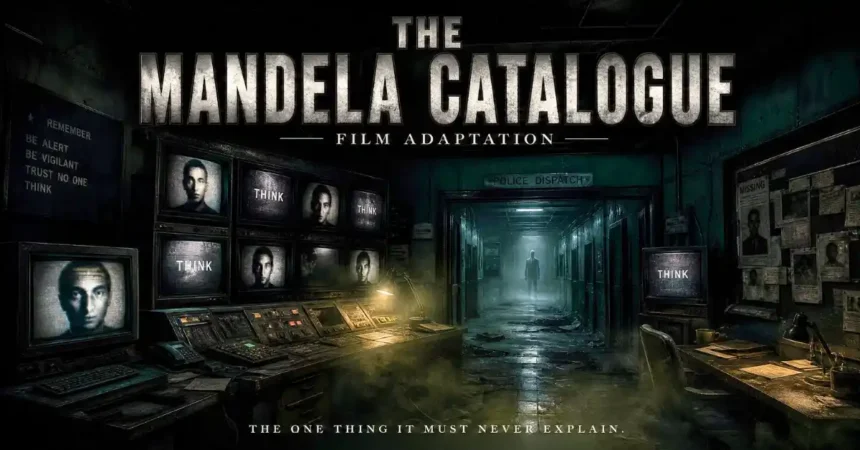
Building on that momentum, The Mandela Catalogue film adaptation has now officially entered the development stages. According to Deadline, United Artists’ Scott Stuber, Amblin’s Steven Spielberg, and Amazon MGM Studios have come together for the project. They have won the film rights to the viral YouTube analog horror series after a highly competitive 11-studio bidding war.
The film will be directed by the creator himself, Alex Kister, based on a screenplay he adapted with Tyler Clifton. Spielberg and Holly Bario are producing for Amblin Entertainment alongside Aaron B. Koontz for Paper Street Pictures and Stuber and Nick Nesbitt for United Artists. Kister and Clifton are added to the list of producers as well.
What is The Mandela Catalogue series about?
The Mandela Catalogue series was launched in 2021, and it has amassed over 100 million views across all of its episodes. It is set in a fictional Mandela County that is invaded by shape-shifting, unearthly, immortal creatures called “Alternates.”
Why are the Alternates unique? Because they psychologically torture their victims with the ultimate goal of assuming their identities as doppelgangers. They want to eradicate humanity and take their form, using torture to the point that they are forced to commit suicide.
How do they do it? With a peak power of hijacking screens and broadcasts, even if it means using devices like televisions, PCs, and vehicle GPS systems. This power is also referred to as “media projection,” where these ghoulish entities surpass physical boundaries and replace them with cryptic anomalies.
What is the one thing that The Mandela Catalogue film adaptation must never explain?
The Mandela Catalogue thrives on the psychological horror of inexplicable things. Unlike traditional horror films, it does not rely on jump scares or endless monster attacks; rather, its terror comes from uncertainty, just like Siren Head, created by another Canadian horror illustrator, Trevor Henderson, that went viral from his Twitter and Instagram posts of original artwork.
Every tape in The Mandela Catalogue leaves viewers questioning what is real, who can be trusted, and what exactly the mysterious Alternates are. This uncertainty is precisely what the filmmakers should capitalize on.
Why has uncertainty become the “king” of the content that modern audiences consume these days? Trust the audience and don’t replace the ambiguity with lore explanations. One reason The Mandela Catalogue became a cultural phenomenon is that it respected the audience’s wild imagination and never stopped to explain every single detail, symbol, or supernatural event.
The audience was left to put the pieces together via online discussions, repeated viewings, and fan theories that kept them engaged to date. The collaborative mystery became part of the entire experience, and modern audiences are ready for the same atmospheric obscurity that they found compelling in the first place.
The Alternates aren’t terrifying because the audience knows everything about them; they are terrifying because they exist beyond comprehension, and their changing identities add to the genuine paranoia. If the filmmakers preserve this very essence of the series, the film adaptation won’t just honor the YouTube series but could become one of the rare horror magics on the big screen, as Kane Parsons’ Backrooms and Curry Barker‘s Obsession have already proved.
When the audience’s imagination has done much of the work in the comments section of the famous YouTube series, why is a film adaptation necessary now? They would now be able to experience it on a big screen on a larger, more immersive canvas. It is a good thing that the creator himself is involved in the development process, as the filmmakers should know that a well-executed adaptation shouldn’t either snatch away the fun of ambiguity or overexplain the mystery.

Passionate Entertainment Writer | Trusted Pop Culture Voice
Madiha Ali is an experienced entertainment writer with over five years of expertise in covering movies, TV shows, celebrity news, and pop culture. Her bylines appear on trusted platforms like The Rolling Tape, Screen Anarchy, High on Films, Ary News, The Express Tribune, Tea and Banter, Show Snob, CelebFeedz, Snapfeedz, Daily Planet Media, The Irish Insider, and Movie Insiderz.
She brings a personal, insightful approach to every story—whether she’s analyzing the emotional layers of a film or giving her take on trending celebrity headlines. Madiha’s writing style is known for being authentic, well-researched, and reader-focused.
When she’s not writing, she’s fully immersed in the world of entertainment—watching new releases, revisiting classics, exploring behind-the-scenes content, or reading books that fuel her creativity. Her passion for storytelling drives her work and helps her stay connected to what matters most in the industry.
Madiha believes great stories start conversations, challenge perspectives, and stay with us long after the credits roll. Through her writing, she continues to share those stories with clarity, depth, and heart.
Expertise in Entertainment Journalism
Published on Trusted Media Platforms
Audience-Focused & Original Voice
Dedicated to Quality Content