


Cinema is growing exponentially in terms of stories that are instant attention grabbers; the actors who are crossing their comfort thresholds to give audiences some of their most beloved characters; and the franchises that are taking a complete U-turn to redefine storytelling for superheroes, like DC Studios after the takeover by new co-heads, Peter Safran and James Gunn.
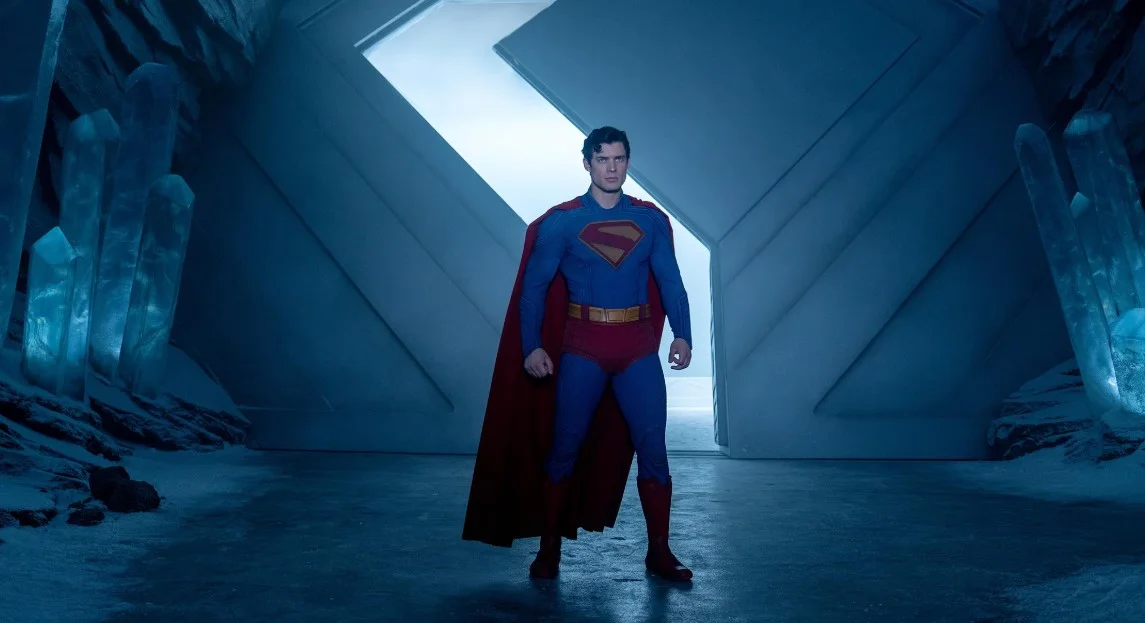
2025 has been a blockbuster year with Ryan Coogler’s Sinners, Danny Boyle’s 28 Years Later, and DC’s brand-new reimagined Superman, envisioned by Gunn. The broad range of genres these films cover tells a lot about the changing audience’s tastes and the age groups these films are trying to cater to.
Millennials and Gen Z comprise the biggest cinemagoing populations now, and filmmakers are constantly studying their film-watching behaviors, as these are the two most exposed generations to screens. They are used to short-form content, and films have become a central discussion of “attention.”
Their attention spans have become shorter, and the filmmakers have to stop them right there, sometimes right from the very beginning of the first scene of their movie. A slow build-up strategy that was successful, probably two decades ago, is a clear risk these days. The goal is no longer to merely entertain but to convince them that the two hours are worth their time in an era where countless alternatives are one tap away.
Why they should put away their phones and be completely locked in to the big theater screen, for which they were forced to spend a bit of their money on tickets, is the real reason they should be coming back for more.
Audience tastes behind box office hits
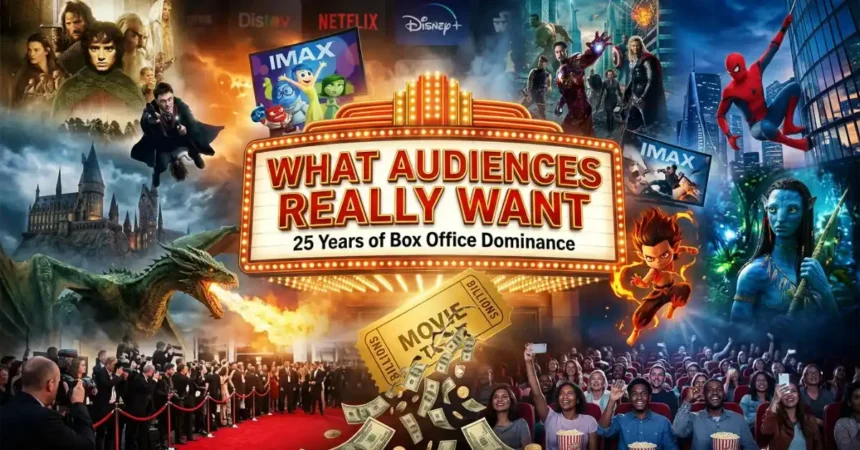
By gathering data from Box Office Mojo, we have enlisted here the worldwide box office toppers from 2000 to 2025. We will dissect what they show about audiences’ liking for a specific type of content and what they demonstrate in terms of audiences’ spending on movie tickets, original vs. existing intellectual property (IP), the growth of animation, the rise of fantasy and spectacle, and the family movie-going experience.
| Movies | Years | Worldwide earning |
| Ne Zha 2 | 2025 | $2,267,446,370 |
| Inside Out 2 | 2024 | $1,698,863,816 |
| Barbie | 2023 | $1,447,138,421 |
| Avatar: The Way of Water | 2022 | $2,320,631,329 |
| Spider-Man: No Way Home | 2021 | $1,910,982,770 |
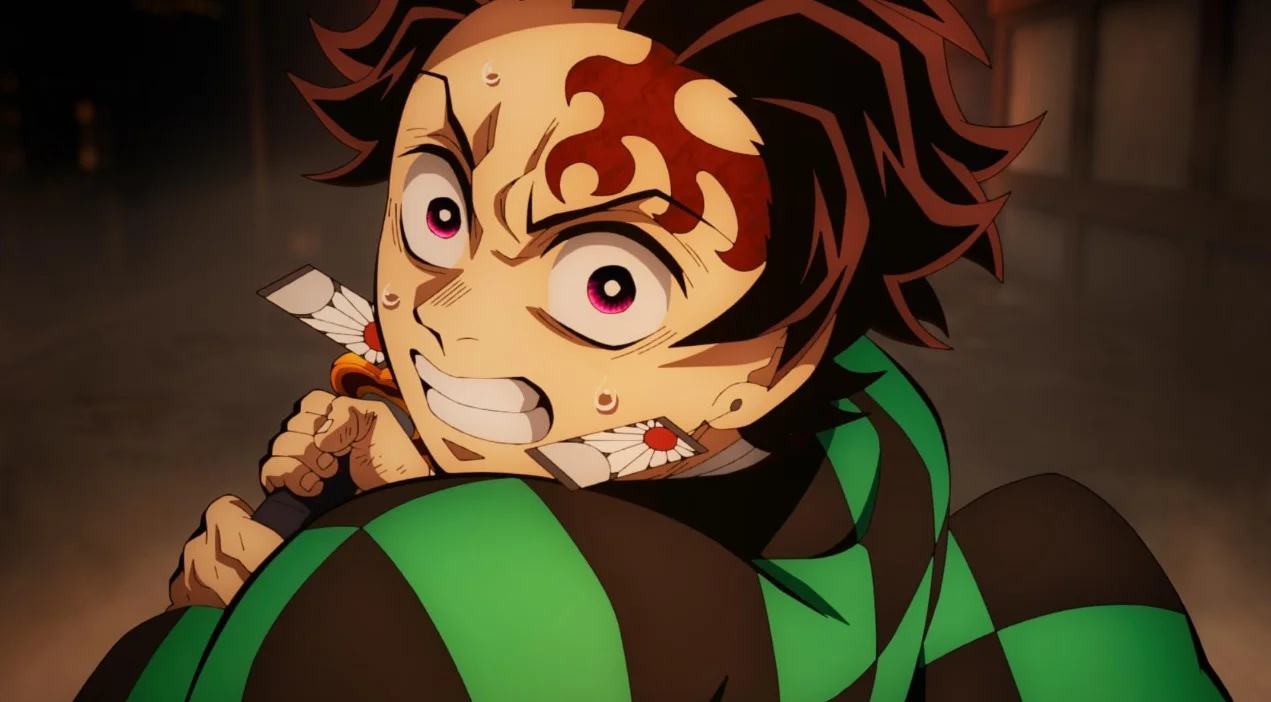
| Demon Slayer: Kimetsu no Yaiba (The Movie: The Mugen Train) | 2020 | $472,162,520 |
| Avengers: Endgame | 2019 | $2,799,439,100 |
| Avengers: Infinity War | 2018 | $2,048,359,754 |
| Star Wars: Episode VIII- The Last Jedi | 2017 | $1,332,539,889 |
| Captain America: Civil War | 2016 | $1,153,296,293 |
| Star Wars: Episode VII- The Force Awakens | 2015 | $2,068,223,624 |
| Transformers: Age of Extinction | 2014 | $1,104,054,072 |
| Frozen | 2013 | $1,284,879,663 |
| The Avengers | 2012 | $1,518,812,988 |
| Harry Potter and the Deathly Hallows: Part 2 | 2011 | $1,341,511,219 |
| Toy Story 3 | 2010 | $1,066,969,703 |
| Avatar | 2009 | $2,743,577,587 |
| The Dark Knight | 2008 | $1,003,845,358 |
| Pirates of the Caribbean: At World’s End | 2007 | $960,996,492 |
| Pirates of the Caribbean: Dead Man’s Chest | 2006 | $1,066,179,725 |
| Harry Potter and the Goblet of Fire | 2005 | $895,921,036 |
| Shrek 2 | 2004 | $929,110,148 |
| The Lord of the Rings: The Return of the King | 2003 | $1,118,887,224 |
| The Lord of the Rings: The Two Towers | 2002 | $923,015,234 |
| Harry Potter and the Sorcerer’s Stone | 2001 | $974,755,371 |
| Mission Impossible II | 2000 | $546,388,108 |
Have audiences been spending more?
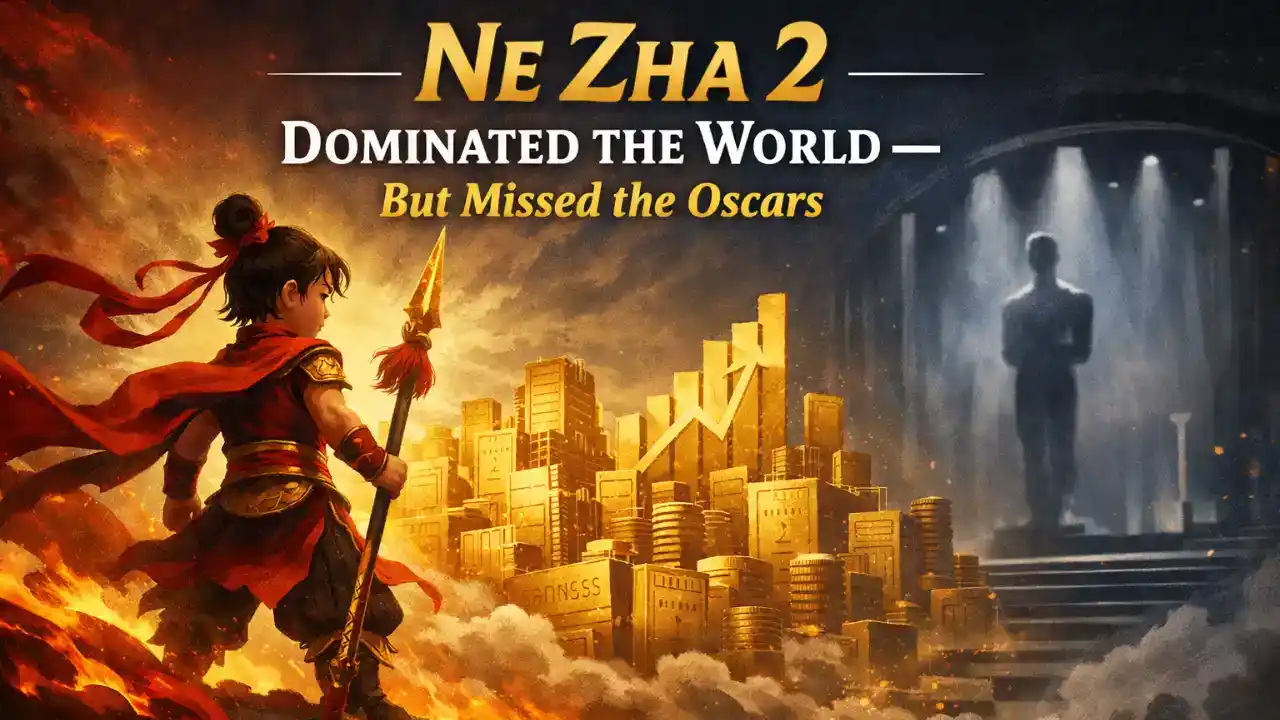
From 2000, when Mission Impossible II earned $546 million, to 2025, when Ne Zha 2 reached about $2.27 billion, the financial scale of blockbuster filmmaking has expanded significantly. However, this does not mean that the audience has been spending more.
Several factors boosted grosses, such as inflation in ticket prices; premium formats (IMAX, 3D, and Dolby Cinema) charging more; international markets like China having grown bigger; global population growth; and more screens becoming available worldwide.
The actual attendance might not be as it may seem, but the gross revenue grew. For instance, Avatar and Avengers: Endgame sold an enormous number of tickets, but a major part of their revenue came from higher prices and premium screenings.
Also, the post-pandemic surge in people going to cinemas was a clear sign that people rushed outside their homes for entertainment. Since the pandemic had temporarily reduced theater attendance, a clear surge in gross earnings is seen from 2020 to 2022, with Demon Slayer winning with only $472 million, while the following two films were massive box office successes.
Original stories vs existing IPs
On one side, much of the uproaring demand exists for original stories, but there remains no doubt, while looking at the tabulated trend above, that audiences overwhelmingly favor familiar IP. Harry Potter and The Lord of the Rings are the clear winners. Comic book adaptations such as The Dark Knight, Avengers, and Spider-Man are also included in this trend.
Sequels and franchises rule, while only a handful of movies were seen shining on the big screen. They only include Frozen (also loosely based on a fairytale) and Avatar. Familiar worlds and recognizable characters are what the audiences are ready to pay for. Long-running franchises have gained the audience’s trust, and therefore, viewers don’t hesitate to watch them one more time in theaters.
Growth of animation
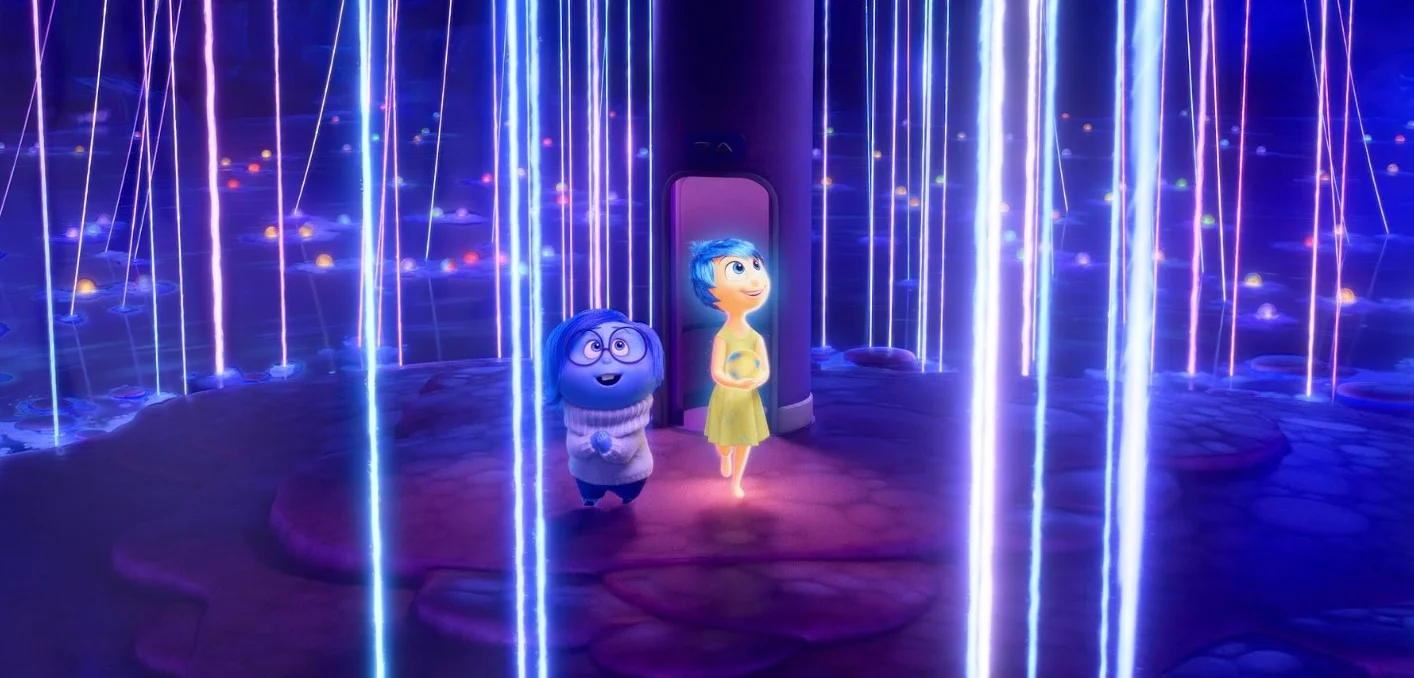
In the early 2000s, animation was rarely seen anywhere. Other than Shrek and Toy Story, animation was hardly the talk of the town for the general public. Ne Zha 2, Inside Out 2, and Demon Slayer: The Mugen Train changed everything when hi-fi visuals and deeper storytelling were revered.
Animation now appeals to children, teenagers, and adults alike. Unlike live-action films, animation travels across cultures more easily. It has become more of a family entertainment event and has claimed a spot among mainstream, blockbuster formats.
Family-friendly movies are a win-win
Most of the animation films are worldwide box office toppers, as family-friendly content drives each member to come to the cinema and enjoy the shared experience. Parents buy multiple tickets and support repeat viewings. Toy Story, Shrek, Inside Out, and Ne Zha 2 appeal to all age groups, indicating the safest path to massive global revenue for family-friendly content.
Non-Hollywood productions gaining the limelight
Ne Zha 2 (China) and Demon Slayer (Japan) depict that Asian markets are now powerful enough to create billion-dollar hits. The global audience has become more open to non-English language films, which is also one of the impacts of lockdowns during the pandemic. People had nothing to keep themselves entirely entertained with but to consume content from all over the world all day. They soon realized that the rest of the world has more to offer.
Wrapping up…
The audience still spends a lot on cinemas, but they are selective about which movies deserve a theater visit. Action franchises, fantasy adaptations, and family animation dominated from 2000 to 2007. The shared universes were more popular from 2008 to 2019, while movies that transformed into “events” were the highlights from 2020 to 2025.
Event movies are now the big game; despite being a gigantic critical and Oscar success, One Battle After Another (2025) and Sinners did not top worldwide box office earnings. The blockbuster attraction tells a different story from what critics and the general public think. Why does the audience buy tickets for them, or why does it not measure their popularity, while event movies are more about entertainment value and broad appeal.

Passionate Entertainment Writer | Trusted Pop Culture Voice
Madiha Ali is an experienced entertainment writer with over five years of expertise in covering movies, TV shows, celebrity news, and pop culture. Her bylines appear on trusted platforms like The Rolling Tape, Screen Anarchy, High on Films, Ary News, The Express Tribune, Tea and Banter, Show Snob, CelebFeedz, Snapfeedz, Daily Planet Media, The Irish Insider, and Movie Insiderz.
She brings a personal, insightful approach to every story—whether she’s analyzing the emotional layers of a film or giving her take on trending celebrity headlines. Madiha’s writing style is known for being authentic, well-researched, and reader-focused.
When she’s not writing, she’s fully immersed in the world of entertainment—watching new releases, revisiting classics, exploring behind-the-scenes content, or reading books that fuel her creativity. Her passion for storytelling drives her work and helps her stay connected to what matters most in the industry.
Madiha believes great stories start conversations, challenge perspectives, and stay with us long after the credits roll. Through her writing, she continues to share those stories with clarity, depth, and heart.
Expertise in Entertainment Journalism
Published on Trusted Media Platforms
Audience-Focused & Original Voice
Dedicated to Quality Content