

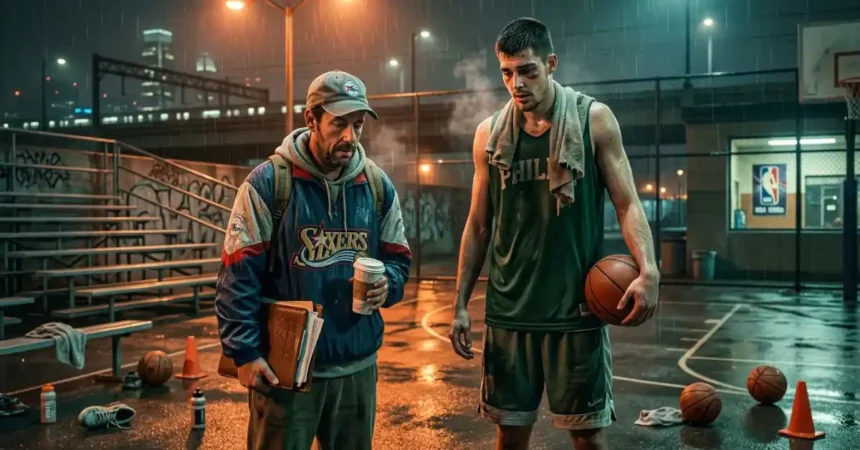
Sports movies are all about struggles, and nothing could be more human than ‘struggle.’ What is it so special about Adam Sandler’s Hustle movie? Most sports movies tend to depict becoming a hero in their beloved game as the utmost ambition of their life, but Hustle is different. It is a narrative encircling pressure, sacrifice, failure, aging dreams, and the emotional cost of ambition. The basketball court is used as the stage to express emotions.
The story follows Stanley Sugerman (played by Adam Sandler), who discovers Bo Cruz (Juancho Hernangomez) and wants to bring him on his team without his team’s consent. The team, which is currently down-on-their-luck Philadelphia 76ers, does not approve of Stanley’s decision, but the latter wants a raw, immensely talented streetball player on his team. Together, they battle personal struggles and grind through to prepare for the NBA draft.
Most sports dramas follow a familiar emotional formula that includes a gifted athlete in whose way obstacles emerge, dramatic events happen, and victory arrives in a perfectly timed climax. Some of the impressive examples include Remember the Titans (2000), Miracle (2004), The Perfect Game (2010), and 42 (2023). Hustle is different in the sense that it does not focus on trophies and medals; it focuses on exhaustion. The characters are constantly tired, physically, mentally, emotionally, and even financially.
This realism changes the meaning of the entire story. Bo Cruz is not someone who has perfect abilities for an athlete; rather, he is shown as damaged, flawed, and often overlooked, and he thinks his dream is almost impossible. On the other hand, Adam Sandler, who plays the role of a mentor, is also struggling with his troubles, like regret, career frustration, and the fear that life has already passed him by. This emotional honesty makes the film more real than any other sports film in the industry.
Enjoying a 94 percent critics’ score on Rotten Tomatoes, the film understands the modern pressures of the game. The movie is not a tale of how an able sportsman makes his way through life and earns the deserved position in sports history. It is about handling the real-life pressures that the athlete has to go through as a person as well as a sportsman. The pressures could be about fear of failure, public embarrassment, self-doubt, burnout, toxic competitiveness, and the anxiety of wasted opportunity.
One should understand that even if one of these pressures hits as a person, for example, take ‘fear of failure,’ it couldn’t stop at the game the athlete is involved in. It could translate to much bigger real-world problems, such as not being able to become successful in sports, which are not only his passion but also a means of earning for his family. He is not able to thrive and get the due payment, and from which the athlete had to buy bread and butter or medicines for an ailing parent at home, which becomes difficult.
Why does the Hustle movie connect with modern audiences?
Modern audiences find these situations authentic, as most of today’s conversations around success are more psychological than ever. Modern viewers like imperfection and human flaws, and when the filmmakers have realized that a sports person is also a genuine human with his own bundle of failures and that his talent alone cannot guarantee success, audiences revere the mental resilience he has to endure, which makes the Hustle movie more meaningful than the rest of the sports films in Hollywood.
Let’s talk a bit about the game that the whole movie is about: basketball. The game feels real in these sports films rather than cinematic. A major weakness in many sports films is that the scenarios are artificial, while this is not the case in Hustle. The film uses real NBA players, as per Time magazine, believable training sessions, authentic scouting environments, and natural locker-room energy.
This genuineness keeps the viewers emotionally invested because the world-building is faithfully believable. Even the basketball fans sense when something is real. Several Reddit threads reported that real basketball players interacted with Adam Sandler in the most natural way ever, as if they knew each other very well. It felt real! Conversations sounded like they came from real people who veritably live the sport daily.
Summing up, the Hustle movie understands what most inspirational movies forget: the honesty of human emotions, whether in a game or lifelike situations with a constant fear of losing looming over our heads, is the actual perseverance. The most powerful stories are not about winning; they are about being willing to continue despite the possibility of losing.

Passionate Entertainment Writer | Trusted Pop Culture Voice
Madiha Ali is an experienced entertainment writer with over five years of expertise in covering movies, TV shows, celebrity news, and pop culture. Her bylines appear on trusted platforms like The Rolling Tape, Screen Anarchy, High on Films, Ary News, The Express Tribune, Tea and Banter, Show Snob, CelebFeedz, Snapfeedz, Daily Planet Media, The Irish Insider, and Movie Insiderz.
She brings a personal, insightful approach to every story—whether she’s analyzing the emotional layers of a film or giving her take on trending celebrity headlines. Madiha’s writing style is known for being authentic, well-researched, and reader-focused.
When she’s not writing, she’s fully immersed in the world of entertainment—watching new releases, revisiting classics, exploring behind-the-scenes content, or reading books that fuel her creativity. Her passion for storytelling drives her work and helps her stay connected to what matters most in the industry.
Madiha believes great stories start conversations, challenge perspectives, and stay with us long after the credits roll. Through her writing, she continues to share those stories with clarity, depth, and heart.
Expertise in Entertainment Journalism
Published on Trusted Media Platforms
Audience-Focused & Original Voice
Dedicated to Quality Content